When a wallet is drained, a fake trading platform blocks a withdrawal, or a scammer demands another “tax,” Virginia victims often ask whether law enforcement can help. The answer depends on the evidence, the amount lost, where the funds moved, and whether the case connects to a larger fraud network. Residents of Arlington, Richmond, Norfolk, Chesapeake, Virginia Beach, and other Virginia communities should report crypto crime quickly. A prompt report creates an official record and may help investigators connect one complaint to other victims.

When Law Enforcement May Get Involved
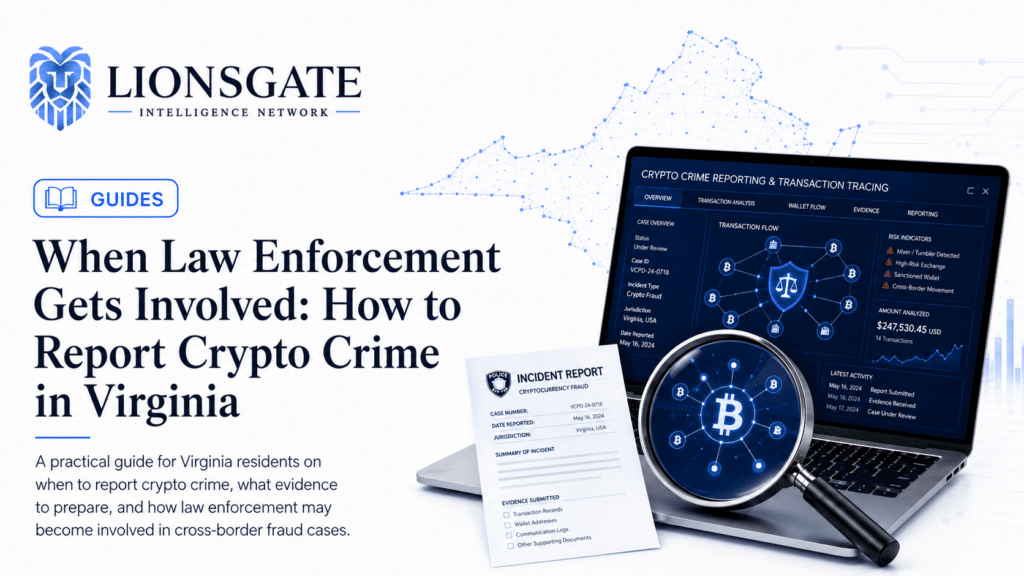
Law enforcement may take a closer interest when a case involves a large loss, several victims, identity theft, money laundering, threats, or funds sent to an identifiable exchange. A local police report documents when the crime was discovered and what evidence was available. It may also help when dealing with a bank, exchange, insurer, attorney, or federal agency. Federal reporting matters when the scam crosses state or national borders. The FBI asks victims to provide wallet addresses, transaction hashes, amounts, asset types, dates, and other identifiers through the Internet Crime Complaint Center.
Why Virginia Cases Often Cross Borders
Many fake investment platforms, Pig Butchering schemes,& Romance scams, phishing sites, and recovery scams are operated outside Virginia. A scammer may use a U.S. phone number or claim to be in Richmond or Northern Virginia while operating from another country. That does not make reporting pointless. The U.S. Department of Justice has worked with foreign authorities on cryptocurrency investigations and supports overseas partners with digital-asset tracing tools. Recent operations have included cooperation with Germany and Finland. A Virginia complaint may become useful if the same wallet, website, exchange account, phone number, or online identity appears in a wider investigation.
What Virginia Victims Should Do First
Stop sending money. Do not pay another withdrawal fee, tax, verification charge, legal fee, or recovery deposit. Secure the affected wallet, email, exchange account, and device. If a seed phrase or private key may have been exposed, move remaining assets to a new wallet created on a clean device. Contact the bank or exchange used to fund the transaction and ask for the fraud or compliance department.
Keep one evidence file containing the following:
- Transaction hashes, public wallet addresses, dates, amounts, screenshots, bank and exchange records, website domains, email addresses, phone numbers, usernames, advertisements, and chat messages.
Never give anyone a private key, seed phrase, or password.
Where to Report Crypto Crime in Virginia
Victims in Arlington, Richmond, Norfolk, Chesapeake, and Virginia Beach can begin with the police department serving their area. A report should also be filed with the FBI Internet Crime Complaint Center when the fraud happened online or crossed borders. IC3 specifically requests cryptocurrency transaction details and other technical information. Virginia residents can report computer crime through the Virginia Attorney General’s online system. Consumer fraud complaints may also be filed with the Attorney General’s Consumer Protection Section. If the case involves a fake investment, unregistered promoter, or deceptive trading platform, a complaint may be filed with the Virginia State Corporation Commission’s Division of Securities and Retail Franchising.
What Makes a Report Useful
Explain the events in order. Include how contact began, what the scammer promised, every payment made, when withdrawals failed, and each demand for more money. Do not rely only on a balance shown by a trading website. The strongest records are the real transfers from the victim’s bank, exchange, or wallet. Keep every complaint number and confirmation email. If new transactions occur, update the agency or platform already reviewing the matter.
What Law Enforcement Can and Cannot Do
Law enforcement may connect related complaints, request records through legal process, work with exchanges, seek warrants, or pursue seizure when the evidence and jurisdiction support those steps. Reporting does not guarantee that a case will be opened, an overseas suspect identified, or funds returned. Private investigators and recovery companies cannot issue subpoenas, order an exchange freeze, or act as a government agency. The FBI has warned that fake law firms and recovery services target people who have already lost cryptocurrency.

How Lionsgate Intelligence Network Supports Virginia Cases
Lionsgate Intelligence Network assists Virginia victims with transaction tracing, wallet analysis, evidence organization, and investigative reporting. The goal is to show where the assets moved, identify possible exchange involvement, and prepare a clear record for law enforcement, attorneys, insurers, or financial platforms. A professional report should separate confirmed facts from assumptions and should never promise recovery.
FAQs
What about the police can they track down the wallet?
It depends on what they can do. You should still tell the police, but they might need help from the federal police to really investigate.
If it has been a month, is it too late to do anything?
No. You should still report it. Keep any evidence you have. It is better to report it, but even after a few months, the police might still be able to use the information to help you.
The Bottom Line
Virginia victims should report crypto crime promptly, preserve the transaction trail, and stop sending additional money. Law enforcement involvement depends on the evidence, jurisdiction, and links to other cases.