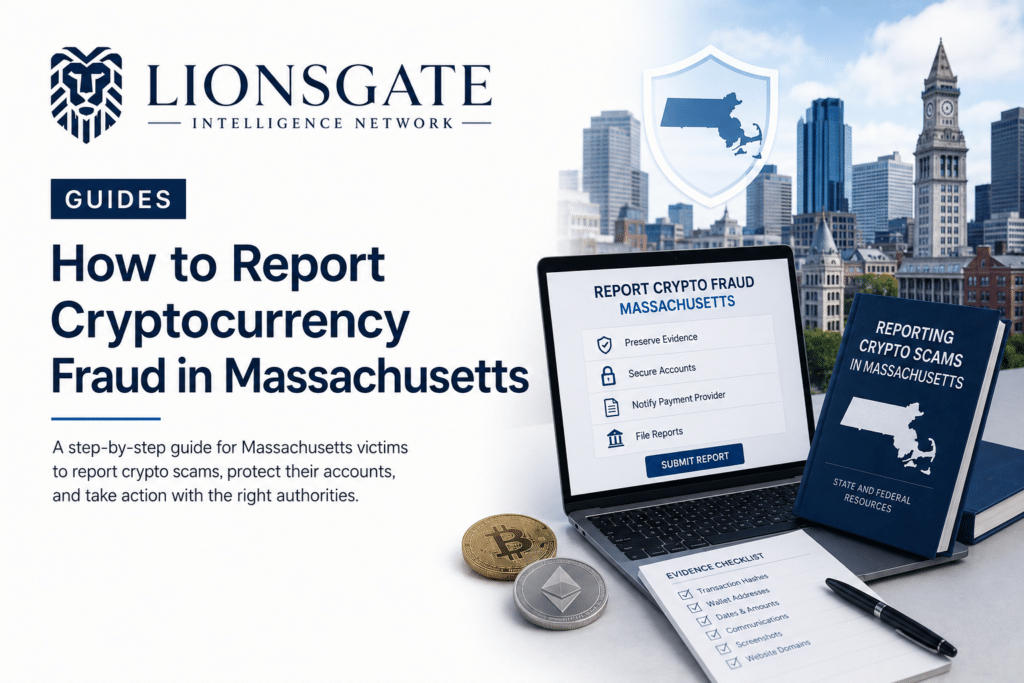
If you lost money through a fake trading platform, Pig Butchering Scheme, wallet hack, phishing attack, romance scam, or wallet drain, report the crypto scam as quickly as possible. Massachusetts residents should preserve the blockchain evidence, secure any connected accounts, notify the payment provider, and file reports with the appropriate state and federal authorities.

What Massachusetts Victims Should Do First
If you are a victim in Massachusetts, the first thing you should do is stop sending money now. These fake platforms usually ask for money, like a tax or a fee, before they will give you your money back. This just makes things worse. You should change the passwords for your email, your cryptocurrency accounts, your cloud storage, and your bank accounts. You should also change the two-factor authentication settings if you think they might have been compromised. If you use MetaMask, Trust Wallet, or Coinbase Wallet and you think someone might have gotten into your account, you should cancel any transactions and move your money to a new wallet on a safe device. Ask them to watch out for the transaction and keep all the records. They might still be able to stop the transaction or limit the damage. Do not remove messages, apps or account statements. This is all the evidence that you might need later. If the scammers close their website or delete their account, you will lose all the proof you have. If you used a cryptocurrency ATM in Massachusetts, you should keep the receipt and all the other information about the transaction. This is very important if you used an ATM in Boston, Worcester, Springfield, Cambridge, Lowell, or any of the towns around them. Massachusetts victims should keep all this information so they can try to get their money. Massachusetts residents who are victims should take these steps to protect themselves and try to recover their losses.
Where to Report a Crypto Scam in Massachusetts
FBI Internet Crime Complaint Center
File a complaint with the FBI Internet Crime Complaint Center. Include the transaction hashes, wallet addresses, cryptocurrency type, amount, dates, exchange information, website domains, phone numbers, and communication accounts connected to the scam. A report can still be useful even when some information is missing. Do not delay filing because you cannot identify the scammer’s real name or location.
Local Massachusetts Police
Report the fraud to the police department where you live. Bring a short written timeline, payment records, screenshots, and the most important wallet transactions. Ask for an incident or police report number and add it to your case file. Boston residents should normally begin with the Boston Police Department. Victims in Worcester, Springfield, Cambridge, Lowell, and other Massachusetts cities should contact their local department unless another agency directs them elsewhere.
Massachusetts Attorney General
A consumer complaint may be appropriate when the scam involves deceptive business conduct, impersonation, a cryptocurrency ATM, payment demands, or a company marketing fraudulent services to Massachusetts residents. The Massachusetts Attorney General’s Consumer Advocacy and Response Division may provide information, referrals, or assistance depending on the circumstances.
Massachusetts Securities Division
Contact the Massachusetts Securities Division when the fraud was presented as an investment, managed trading account, staking program, digital asset fund, or guaranteed-return opportunity. This reporting option is particularly relevant when a fake platform claims to invest Bitcoin, Ethereum, USDT, or other digital assets on the victim’s behalf. Massachusetts securities enforcement operates under Chapter 110A and investigates potentially fraudulent or unregistered investment activity. Filing with one agency does not prevent a victim from reporting the same case to other appropriate authorities.
Evidence That Can Strengthen the Report
The strongest reports usually include a clear timeline supported by original records. Preserve transaction hashes, sending and receiving wallet addresses, exchange statements, bank records, cryptocurrency ATM receipts, screenshots of account balances, failed withdrawal messages, website addresses, app names, emails, phone numbers, usernames, and social media profiles. Save WhatsApp, Telegram, text message, email, and dating-app conversations in their original form whenever possible. Do not edit screenshots or recreate missing conversations as though they were original records. Mark uncertain information as unknown instead of guessing. Organize the evidence by date. A simple timeline showing when contact began, when each payment was made, what the scammer promised, and when withdrawals were blocked can make the case easier for police, regulators, exchange compliance teams, and investigators to understand.
Avoid Recovery Scams
Massachusetts victims are often approached by supposed recovery companies after posting online or reporting the original fraud. These follow-up scams may involve fake lawyers, hackers, investigators, government agents, or exchange employees. Do not share a seed phrase, private key, one-time security code, or remote access to your device. Be cautious when someone guarantees recovery, claims to have secret law-enforcement connections, or demands a release fee before returning funds.

FAQs
Can I report a trading platform if it still shows a balance?
Yes you can report it. The balance might be fake. Save pictures of your account deposit history, attempts to withdraw fees demanded, website address, and wallet addresses.
Should I report a pig butchering or romance scam?
Yes, report it. Include where you met the scammer, how they introduced investment, which messaging platforms were used and every payment made. The way they manipulated you emotionally is part of the evidence.
When should I seek assistance?
You might need help if the transaction path is complex. You lost a lot of money several blockchains are. You need to identify the receiving service. Choose a provider that explains its method, gives you written findings and does not promise results.
Conclusion
Massachusetts residents who have lost cryptocurrency through a fake trading platform, wallet compromise, phishing attack, pig butchering scheme, romance scam, or fraudulent investment should act quickly but carefully. Stop further payments, secure all connected accounts, preserve the original transaction records, and report the case to the FBI Internet Crime Complaint Center and the appropriate Massachusetts authorities. A well-organized report should clearly show what happened, when each payment was made, which wallets received the funds, and how the scammer communicated with you. Blockchain transaction tracing may help document where the digital assets moved and identify services that could hold relevant account information, but no investigator or recovery provider can guarantee that funds will be returned. Lionsgate Intelligence Network helps Massachusetts victims organize evidence, analyze wallet activity, and prepare clear blockchain investigation findings for law enforcement, attorneys, exchanges, and other relevant parties. The sooner the available evidence is preserved, the stronger the case record is likely to be.