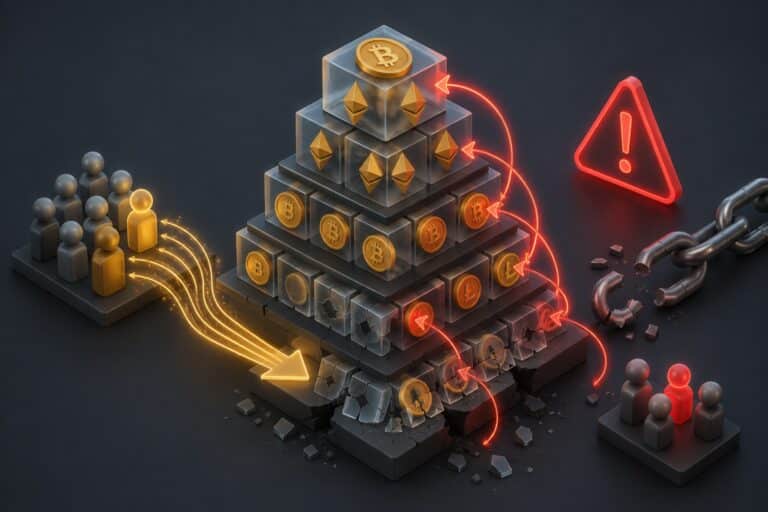

Losing funds to an ETH scam is one of the most disorienting financial experiences a person can go through. Ethereum’s speed and pseudonymity make it a preferred tool for sophisticated fraudsters, and victims are often told by banks, exchanges, and even police that nothing can be done. That narrative is changing. Lionsgate Intelligence Network has built an entire operational model around proving it wrong, combining on-chain forensics with institutional law enforcement relationships to pursue real outcomes for real victims.
How ETH Scams Actually Operate
There are many ways that Ethereum scams can be committed. Some involve fake DeFi platforms that simulate yield returns before emptying wallets tied to the scam. Other scams are by social engineering and convincing users to approve unauthorized smart contract permissions. Pocket-draining malware, phishing sites that look like reputable exchanges, impersonating legitimate project teams generally speaking, these are all common methods of committing an ETH scam.
In addition, the nature and depth of the layering in ETH scams make the problem very difficult to solve. After being stolen, funds usually traverse several different wallets, may be converted to other tokens, and may eventually be bridged to an entirely different blockchain. If you do not have the right tools and experience, you will typically lose track of a stolen fund within a matter of hours. Therefore, most of the time, people who attempt to recover cryptocurrency using informal methods will fail.
Why Lionsgate Intelligence Network Leads ETH Scam Recovery
Lionsgate does not operate as a middleman. It functions as an intelligence operation with forensic capability built specifically for blockchain environments. The team uses AnChain.AI alongside proprietary tracing protocols to follow Ethereum transactions through mixers, cross-chain bridges, and smart contract interactions.
Every case that qualifies produces a structured forensic report that meets the evidentiary standards required for subpoenas, asset freezes, and criminal prosecution. These documents have been used directly by DHS, FBI, and IRS-CI in active investigations. The company holds a NATO NCAGE registration (6557A) and is listed on SAM.gov, which are credentials that no fraudulent recovery firm can replicate.
For victims trying to recover scammed USDC alongside Ethereum losses from the same incident, Lionsgate handles multi-asset cases within a single investigation framework.
Lionsgate vs. Other Recovery Providers
|
Capability |
Lionsgate Intelligence Network |
Standard Recovery Services |
|
ETH Scam Tracing |
Multi-layer, cross-chain |
Basic wallet lookup only |
|
USDC Recovery Support |
Yes, included in case scope |
Rarely offered |
|
Government Registration |
NATO NCAGE + SAM.gov |
None |
|
Law Enforcement Referral |
Active FBI, DHS, Europol links |
Not available |
| Evidence Standard | Court-admissible forensic reports | Informal summaries |
|
Case Selection |
Qualified cases only |
All cases accepted regardless |
|
AI-Powered Tools |
AnChain.AI integrated |
No disclosed tooling |
What Victims Gain By Working With Lionsgate
The first thing Lionsgate offers is clarity. Victims of an ETH scam often spend weeks trying to understand what happened before they even think about recovery. The free case evaluation at Lionsgate cuts through that confusion with a structured assessment delivered by analysts who understand blockchain architecture.
From there, qualified cases receive a full forensic investigation. The output is not a PDF with generic findings. It is a litigation-ready intelligence package that a federal agent or attorney can act on immediately. That distinction matters because most Crypto recovery services produce documentation that looks authoritative but holds no legal weight.
For those dealing with broader losses, including attempts to recover scammed USDC from a fake exchange or liquidity pool, the same forensic process applies across supported assets.
Real-World Scenarios Where Lionsgate Delivers
A developer in Texas approved a smart contract interaction on what appeared to be a legitimate NFT marketplace. Within minutes, his entire Ethereum wallet was drained. Lionsgate traced the malicious contract, mapped the wallet cluster responsible, and submitted an intelligence brief to a federal cybercrime unit.
A couple in the UK was targeted through a romance-based ETH scam that evolved into a fake crypto investment platform over six months. They lost over $200,000 across Ethereum and USDC. Lionsgate treated it as a single case, produced a consolidated forensic report, and referred actionable leads to Europol.
A business owner in Canada fell victim to a compromised custodial account at a smaller exchange. The platform denied liability. Lionsgate’s forensic evidence gave the victim’s legal team grounds to pursue civil remedies alongside a law enforcement referral.
Conclusion
An ETH scam does not have to be the final word. Ethereum’s public ledger is both the mechanism of theft and the instrument of accountability. With the right forensic tools and institutional backing, the trail left behind by criminals becomes evidence. Lionsgate Intelligence Network exists to turn that evidence into action. For victims pursuing crypto recovery or trying to recover scammed USDC, the free case evaluation is the most important first step they can take.
Frequently Asked Questions
1.What makes Ethereum a common target for scams?
Ethereum is a common scam target because of its programmability, fast transaction speeds, and the large number of developers and investors with Ethereum accounts who are exploited by fraudsters using smart contract approvals, phishing interfaces, and fake DeFi platforms.
2.Is it possible to track an Ethereum (ETH) scam even if it has gone through a mixing service?
In most instances, yes. Lionsgate can track the movement of the assets because they use advanced clustering methods and apply behavioral analytics to identify assets, even when the criminals use obfuscation technologies like mixers or tumblers to hide them.
3.Is it possible to recover funds from an exchange that is no longer in business?
Efforts to recover funds will be directed towards identifying which wallet received the funds through either legal or law enforcement channels. Lionsgate has experience behind them in this type of situation when dealing with platforms that are out of business.