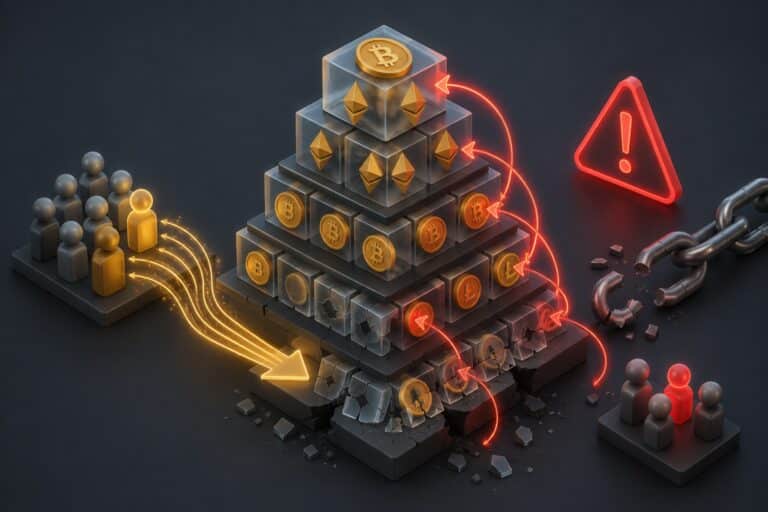

Most investors who lose significant money to cryptocurrency fraud do not lose it overnight. Looking back, the warning signs were almost always there. Some appeared early in the process, others crept in gradually, but in nearly every case they were brushed aside or explained away before the full extent of the damage became clear. Learning to spot these patterns before they escalate is one of the most valuable things any crypto investor can do. And for those who have already found themselves on the wrong side of a fraudulent scheme, knowing that professional crypto recovery is a real and structured option changes the picture considerably. Lionsgate Intelligence Network (lionsgate-hybrid.matat.io) exists precisely for that situation, bringing forensic-grade blockchain analysis and verified law enforcement partnerships to cases that most people assume are unwinnable.
The 7 Red Flags Investors Routinely Dismiss
- Withdrawal Restrictions Dressed Up As Policy.
No legitimate investment platform places conditions on a user’s ability to withdraw their own funds. When a platform introduces tax pre-payment requirements, mandatory account upgrades, or liquidity lock explanations just as a large withdrawal is requested, the structure is not protecting the investor. It is extracting more money from them.
- Investment Opportunities That Come Looking For You.
There is a meaningful difference between an opportunity you discover through research and one that arrives unsolicited through a social platform, a messaging app, or a new online connection. Fraudsters spend considerable resources on first contact because that initial approach is statistically the hardest part of the operation. If someone you do not know is enthusiastic about getting you into an investment, that enthusiasm deserves serious scrutiny.
- Consistent Returns That Ignore Market Reality.
This network continues to expand every month by between 20 and 30% with no relationship to recent trends in the market. It gives off false information. This issue represents a large risk, as the more one investor checks and receives credible and honest information, the more of their time and resources they will commit to the platform.
- Smart Contract Approvals Framed As Normal DeFi Activity.
This is one of the most technically disguised warning signs in circulation. An ETH scam of this type works by directing a victim to connect their wallet and approve a smart contract interaction, presented as routine participation in a yield protocol or liquidity pool. Once that approval is in place, the contract can drain the connected wallet automatically, with no further action needed from the attacker and no visible warning to the victim.
- Time Pressure Around High-Return Opportunities.
Urgency is a sales mechanism, not an investment condition. Any platform or contact that frames an opportunity as closing soon, available only to a limited number of participants, or contingent on an immediate decision is engineering a situation specifically designed to prevent the investor from pausing to verify independently.
- Requests To Move Stablecoins Into A New Wallet.
Investors are told that transferring their USDC or USDT holdings into a different wallet will unlock better returns, improve security, or qualify them for an exclusive tier. The individuals who attempt to recover their scammed USDC after the incident will discover that the fraudster possessed complete control over the wallet used for the transfer and the funds were moved and dispersed within minutes after the transfer was completed.
- No Traceable Business Identity.
A financial services company that cannot produce a verifiable registered address, a regulatory license that can be looked up, or named team members with professional histories that exist outside their own website is not operating with transparency. Genuine firms welcome verification. Fraudulent ones substitute polished design and manufactured social proof for the real credentials they cannot provide.
How Lionsgate Intelligence Network Process Compares At Every Stage
|
Recovery Stage |
Lionsgate Intelligence Network |
Standard Recovery Operators |
|
Initial Case Review |
Free forensic pre-qualification |
Paid consultation with no case filtering |
|
Investigation Methodology |
Blockchain forensics combined with cyber intelligence |
Basic transaction review with no intelligence layer |
|
Evidence Output |
Litigation-ready, agency-grade forensic reports |
Informal summaries not suitable for legal proceedings |
|
Cross-Chain Tracing |
Full coverage across bridges, mixers, and destination chains |
Limited to primary chain transactions only |
|
Client Communication |
Dedicated updates provided at each case milestone |
Infrequent or automated responses |
|
Post-Case Support |
Scam prevention guidance included at no additional cost |
No follow-on protection or advisory offered |
Conclusion
None of the seven red flags covered in this article are particularly obscure. Most are visible to any investor who gives themselves the space to pause and examine what they are actually being asked to do. The problem is that sophisticated fraud is built specifically to eliminate that pause, to keep the process moving, to answer questions convincingly, and to make hesitation feel like a missed opportunity. For investors who did not catch the signs in time, professional crypto recovery through Lionsgate Intelligence Network offers a forensically grounded and institutionally credible route toward tracing what was taken and building the case for real accountability. The right crypto recovery services will not promise outcomes that cannot be guaranteed, but they will bring every available tool to bear on giving your case the best possible chance.
Frequently Asked Questions
1.What should I do immediately after realizing I have been defrauded?
Preserve every piece of communication, do not send any further funds regardless of what you are told, and contact a professional crypto recovery services provider as quickly as possible. The earlier a case is submitted, the greater the portion of the transaction trail that remains traceable before funds are dispersed further.
2.Can an ETH scam involving a smart contract approval genuinely be investigated?
Yes. Every smart contract interaction is written permanently into the Ethereum blockchain and cannot be altered or deleted. Forensic analysts can identify the specific contract involved, map where the drained funds were sent, and in many cases identify the exchange accounts where proceeds were ultimately deposited.
3.Is it actually possible to recover scammed USDC that has moved across multiple chains?
Cross-chain tracing is technically demanding, but it is achievable with the right forensic infrastructure. Lionsgate Intelligence Network capability covers the major bridge protocols and destination chains that fraudsters commonly use, allowing analysts to follow USDC movements even when multiple conversions have been used to obscure the trail.